Photo day is the deadline to plan around, because those pictures stay on the listing for the whole sale. Clear out what's leaving about three weeks ahead, finish repairs and paint next, do the heavy clean about a week before the photographer, and keep the last two days for touch-ups. Run it in that order and you won't wash a floor before a sofa gets dragged across it.
Three weeks is enough if you work back from the photographer's visit
Ask your agent for the photo date first, then pencil in the rest. A smaller condo can compress this into ten days. A house with a full basement probably can't.
- Three weeks before: sort every room and closet into keep, pack, donate and discard. Book anything that needs a pickup.
- Two weeks before: get rid of the discard pile and move packed boxes out or stack them neatly in one spot. Finish painting and small repairs now, because both leave dust and marks behind.
- Ten days before: look behind the furniture you moved. Scuffs, cobwebs, dust along the baseboards and any damp patches show up once a dresser is out of the way.
- Seven days before: do the heavy clean or have it done, top to bottom, with appliances and bathrooms included.
- Two days before: wash the windows you can reach from inside, launder the bedding and towels you'll show, and clear the kitchen counters for good.
- The morning of: take out the garbage, put toilet lids down, turn on every light, hide the pet bowls and dish rack, and run the vacuum one last time so the lines in the carpet are fresh.
What leaves the home goes to different places, and Toronto's rules are specific
A pre-sale clear-out produces odd things: a basement carpet, half a can of paint, the old fridge from the garage. The City of Toronto's oversized and metal items and household hazardous waste pages say where each one belongs.
| Item | What the City asks |
|---|---|
| Furniture, mattresses, lamps, luggage | Beside your garbage bin on collection day, with 0.5 metres between items. Take apart anything loose or heavy, such as cabinet shelving. |
| Fridge, stove or other appliance | Same spot, with the doors removed. |
| Old carpet and underpad | Rolled, cut and tied in bundles no longer than four feet and no heavier than 20 kilograms. |
| Leftover tile, drywall, baseboards, old cabinets, doors | Not at the curb. A Drop-Off Depot or a private company takes them. |
| Paint, including empty cans, and spray paint | A Drop-Off Depot, free, up to 50 litres or kilograms per trip. Keep lids on and don't pour different paints into one can. |
| Half-used bleach, ammonia cleaner, drain cleaner, oven cleaner, floor polish | Same depots, ideally in the original sealed containers. |
| A large load of paint or chemicals | Toxic Taxi home pickup for 10 to 50 litres or kilograms, booked through a City service request or 311. City-serviced apartment and condo buildings book it through the property manager or building staff. |
In Vaughan, Markham and Richmond Hill, York Region says household hazardous waste and special items aren't collected at the curb and go to one of its waste depots, and its Bindicator tool looks up a single item. Condo owners should also check what the building allows in the garbage room and whether the service elevator has to be booked for anything bulky.
Clean in the order a buyer walks through, and open what they will open
People viewing a home try doors, pull out drawers and look inside closets, because they're working out whether their own things will fit. So the insides matter as much as the fronts.
Front door and entry
This is the first thing anyone touches. Wipe the door, the handle and the frame, then the switch plates and baseboards around them. Empty the coat closet down to a few hangers. In winter, wash salt off the floor before photos; our notes on road salt stains cover the white film it leaves.
Kitchen
- Oven and microwave inside, since both get opened.
- Fridge inside and out, with the magnets and school calendars gone.
- Range hood and the backsplash behind the stove, where grease builds up on the hood and cabinets without anyone noticing.
- Cabinet fronts and handles, plus the toe-kicks at floor level.
- Under the sink: remove the old sponges, and wipe the base so a buyer checking for leaks sees a dry, clean shelf.
Bathrooms
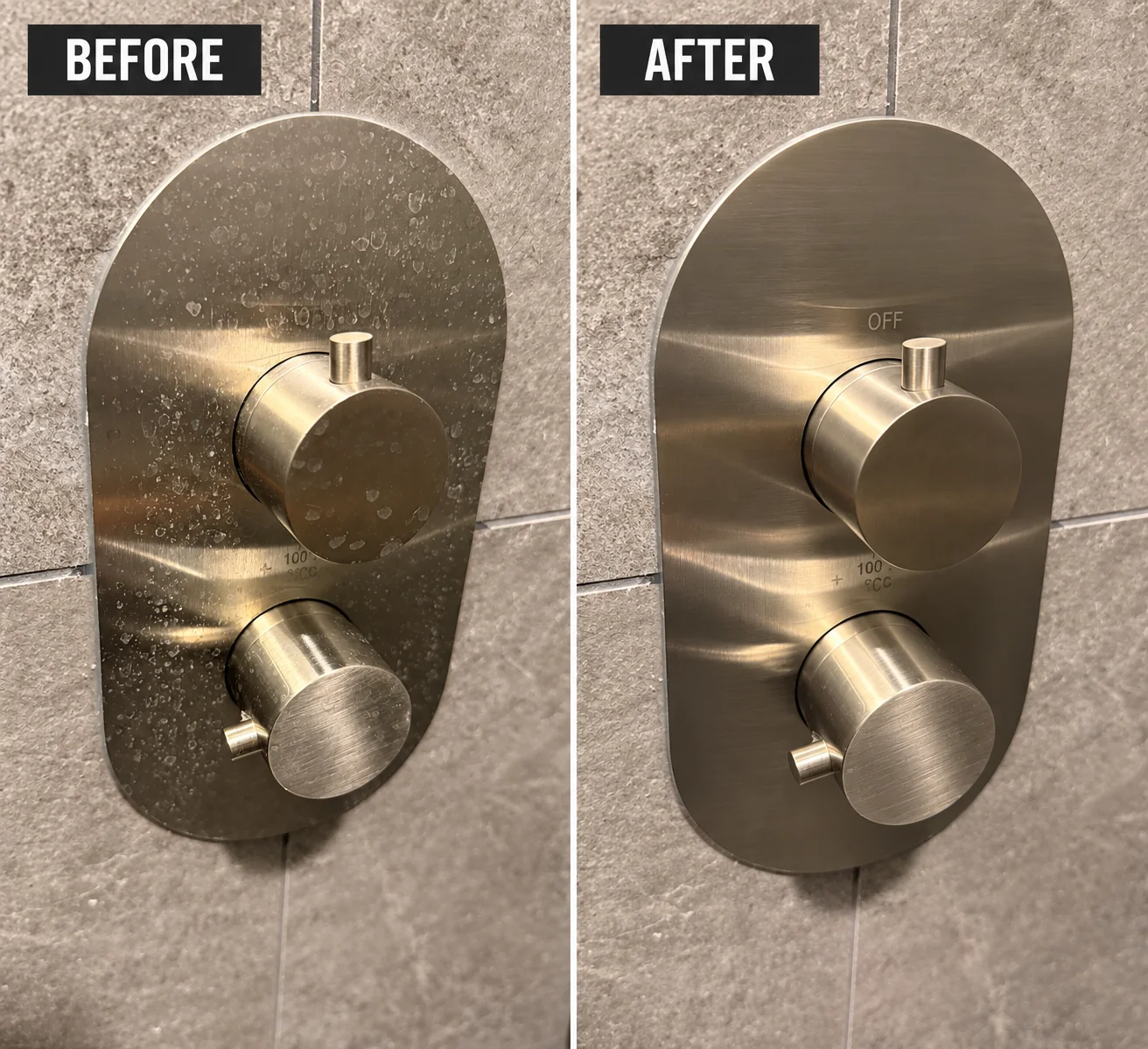
Bathrooms photograph badly when anything is left out. Clear the tub ledge and vanity completely, then work on tile, grout, glass and taps. Limescale on taps and shower glass takes more than a wipe, so give it its own time. Don't skip the fan cover or the floor behind the toilet.
Bedrooms and closets
Vacuum under the beds and wipe the headboards. Take a third of the clothes out of each closet so the rod and the floor can be seen, then dust the shelf above. Windowsills and tracks collect a season's worth of grime that shows up the moment the blinds are raised for a photo.
If moving the furniture uncovers mould, Health Canada sets out what to do
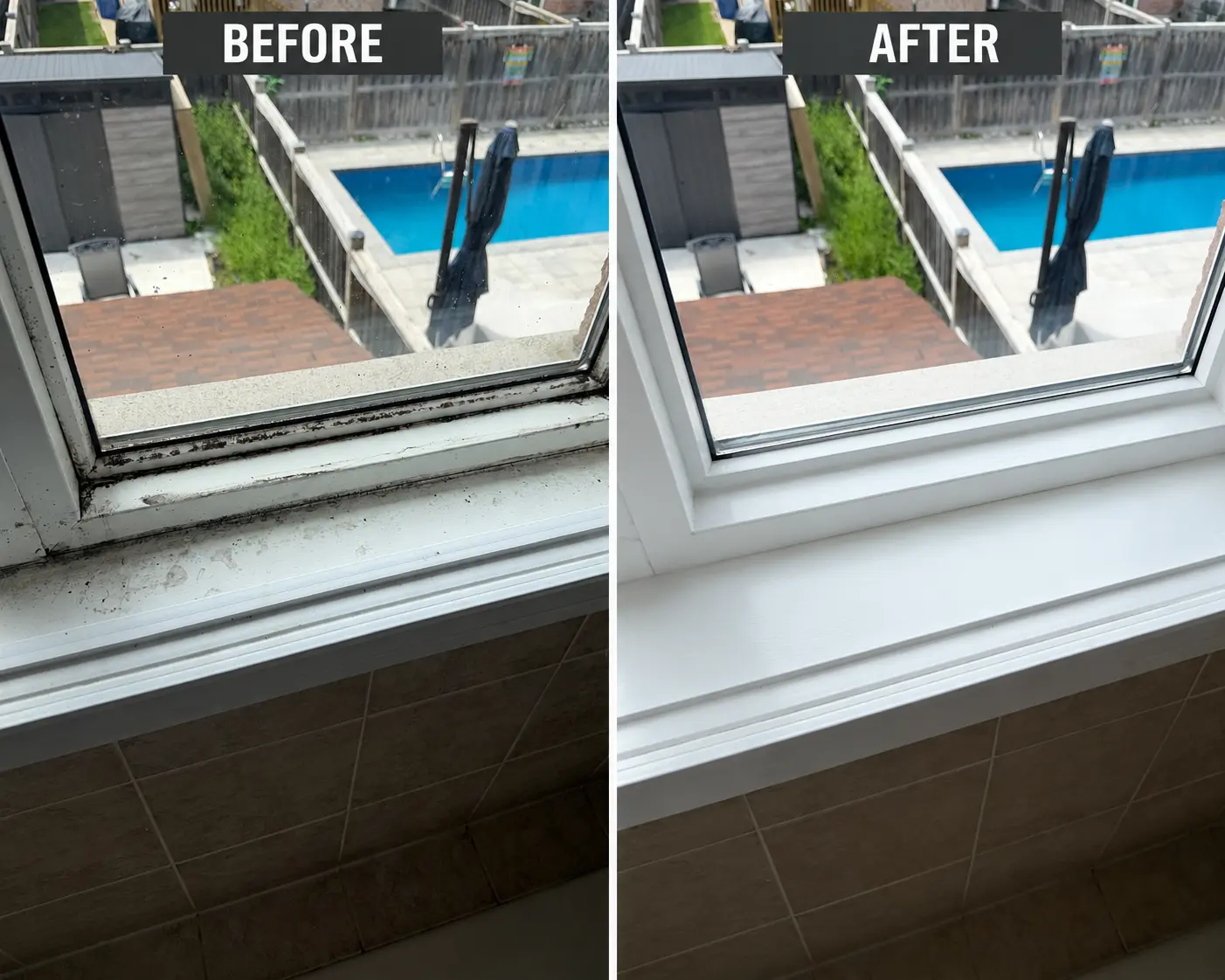
A clear-out is often when someone first sees a dark patch behind a bed or in a basement corner. Fix the cause first, whether that's a leak or water coming in, and dry wet surfaces inside two days. Health Canada's mould infographic then draws the line by size and surface:
Clean all small patches (< 1m2) of mould on non-porous surfaces with soap and water. If the area is larger, you should hire a professional.
Non-porous means glass, metal, leather, plastic and vinyl. Drywall, cardboard, paper and untreated wood are porous, and the same page says to replace building materials that can't be cleaned. It also says to wear a mask, goggles and gloves, and that bleach isn't needed. Deal with this before painting, so the repair doesn't end up under fresh paint on photo day.
Deep cleaning fits a home you still live in, move-out cleaning fits an empty one
The right booking depends on whether your furniture is still there on the day. If you stay until closing, the first gets the home ready for photos. If you've already moved, the second reaches the cupboards and floors your things were covering. You can also book one of each: the deep clean before photos, the move-out clean after the movers leave.
| Your situation | The service and what its checklist reaches |
|---|---|
| Living there, furniture in place, photos coming | Deep cleaning reaches baseboards, doors, vents, light fixtures and fans; inside the oven, fridge and microwave; range hood; tile, grout and shower glass; under accessible furniture. Cabinet and drawer interiors by request, with additional time. |
| Belongings out, or nearly out, before photos or before handover | Move-in and move-out cleaning reaches cabinets, drawers and built-in storage inside and outside; closets; appliance interiors; bathrooms; every floor. Water and electricity need to be on. |
| Just painted or renovated to sell | Post-renovation cleaning covers fine dust and residue once the work is finished. The space must be safe to enter, with tools and major debris removed. Our article on renovation dust explains the timing. |
On showing days, a fifteen-minute reset covers what buyers see first
Once the listing is live, you only need to hold the standard. Showings can come with little notice, so keep the supplies in one bag near the door.
- Dishes in the dishwasher, counters wiped, garbage out.
- Bathroom towels straightened, sink wiped dry, toilet lid down.
- Beds pulled tight, laundry out of sight.
- Boots and coats in the closet, entry floor wiped.
- Litter box and pet dishes cleaned and put away.
If the home is on the market for a while and you're still living in it, a weekly or bi-weekly house cleaning keeps the floors and bathrooms at photo standard between showings. When a sale closes and you're packing, you can switch to a one-time visit.
Tell the cleaner your dates and what's staying when you ask for a quote
Send the photo date and any closing date, the size of the home, and whether appliances stay. For a condo, mention elevators, concierge access and parking. Photos on WhatsApp help prepare a free estimate, and PavMa confirms the scope of work before the cleaning begins. You don't have to be home: share access instructions when you book, and PavMa confirms the arrangement before the visit. Visits run Monday to Saturday, 8 AM to 7 PM, so for a Sunday open house, book the Saturday or earlier. Request one through the deep cleaning quote form or call 437-889-1213.
Timing, closets and leftover paint when you're selling
How long before listing should a home be deep cleaned?
About a week before the photographer comes works well. By then the clear-out, painting and repairs are finished, so the dust from that work doesn't land on clean surfaces, and two days remain for touch-ups.
Do closets and cabinets need cleaning before a home goes on the market?
Yes, because people viewing a home open them to judge storage. Thin out the contents and wipe the shelves. In PavMa's deep cleaning, cabinet and drawer interiors are available by request with additional time; in move-out cleaning they are part of the checklist.
Can old paint go out with the oversized items in Toronto?
No. The City of Toronto lists paint as household hazardous waste, which goes to a Drop-Off Depot at no charge, up to 50 litres or kilograms per trip. Toxic Taxi home pickup handles loads of 10 to 50 litres or kilograms.