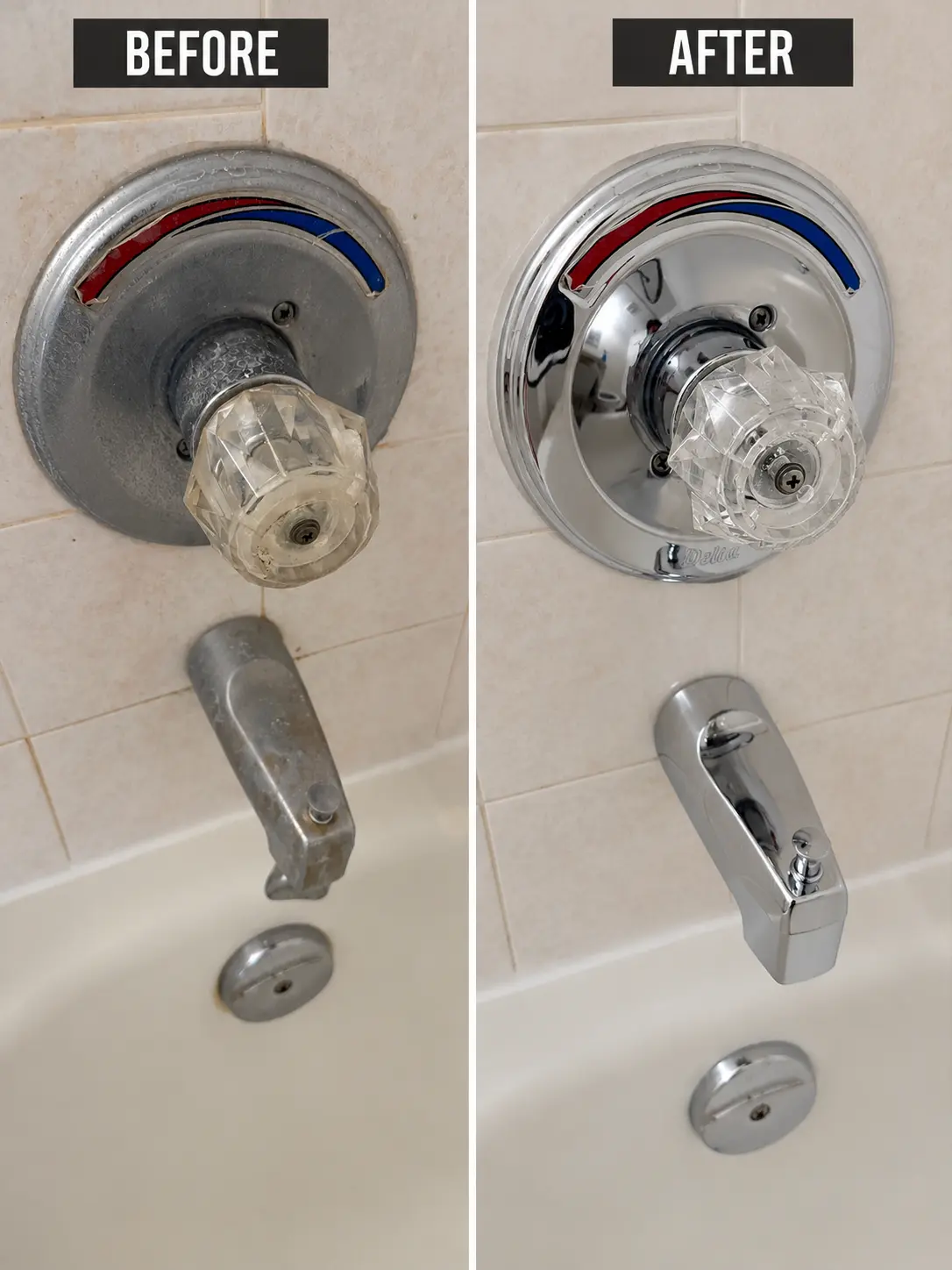
The chalky ring around a tap and the cloudy film on shower glass are minerals, mostly calcium and magnesium, that stay behind each time a drop of water dries. Ordinary bathroom cleaner barely touches them, because they need a mild acid to dissolve. Which acid, and for how long, depends on the surface under the crust. Wiping surfaces dry after use is what stops the next layer.
York Region rates the water in Markham, Richmond Hill and Vaughan as hard
York Region publishes the average hardness of every water system it runs, in milligrams per litre of calcium carbonate, together with the scale it uses to grade it. On that scale, 0 to 60 is soft, 61 to 120 moderately hard, 121 to 180 hard and anything above 180 very hard. The figures below are the region's averages for the second quarter of 2026.
| Area | mg/L | Grains per gallon |
|---|---|---|
| Markham | 126 | about 7.4 |
| Richmond Hill | 127 | about 7.4 |
| Vaughan | 128 | about 7.5 |
All three sit just above 121, the line where York Region's scale starts calling water hard. The grains column uses the region's own conversion: multiply milligrams per litre by 0.058417831. Softener manuals and test strips often work in grains, so the second number is the one to compare with a strip from the hardware store. All three areas get their water through the York Water System, which the region says receives water from Peel Region and the City of Toronto. Thornhill sits across the Vaughan and Markham line, so its homes fall in the same range. The full table, including the towns farther north, is on York Region's page on drinking water quality and monitoring.
The City of Toronto describes its Lake Ontario water as containing relatively low levels of these minerals and says softening systems are usually not needed. Its tap water page gives the same remedy for deposits on fixtures: vinegar or a commercial hardness remover. A Toronto shower still leaves a crust when water dries on chrome for months, only more slowly.
Limescale and soap scum look alike, and only limescale gives way to vinegar
Before you reach for an acid, check which deposit you are looking at. Most shower doors carry both, layered.
- Limescale is hard and chalky. Scratch it with a fingernail and it feels like a thin shell. It forms where water sits and dries: the tip of the spout, the base of the tap, the bottom edge of the glass, the rim of the drain.
- Soap scum is soft and slightly greasy. A fingernail leaves a smear in it. It collects where soap and body oils splash: the lower half of the shower wall, the tub ledge, the soap dish.
- A grey film that comes off with dish soap and warm water was mostly scum. Whatever is still white after that wash is mineral.
Take the scum off first with soap and water. An acid poured over a greasy layer has to work through it before it reaches the minerals, and it runs off before it gets there.
Which bathroom finishes can take a mild acid
White vinegar is a weak acid, and that is why it works. The same property marks some finishes. Check the surface before the deposit.
Chrome, glass, glazed tile and porcelain enamel
These tolerate household vinegar well, diluted half and half with water for a light film or undiluted for a thick crust. Rinse with plain water afterwards and dry. Acid left to dry on the metal frame of a shower door or its seals is what slowly dulls them.
Marble, travertine, limestone and other natural stone
Keep vinegar and lemon off them entirely, including the drips that run down from a tap onto a stone vanity top. These stones are calcium carbonate, the same material as the scale, so the acid etches a dull spot into the stone itself. Use a cleaner labelled safe for natural stone, and wrap the tap in a vinegar cloth only after the stone around it is covered with a dry towel.
Brushed steel, matte black and coloured fixtures
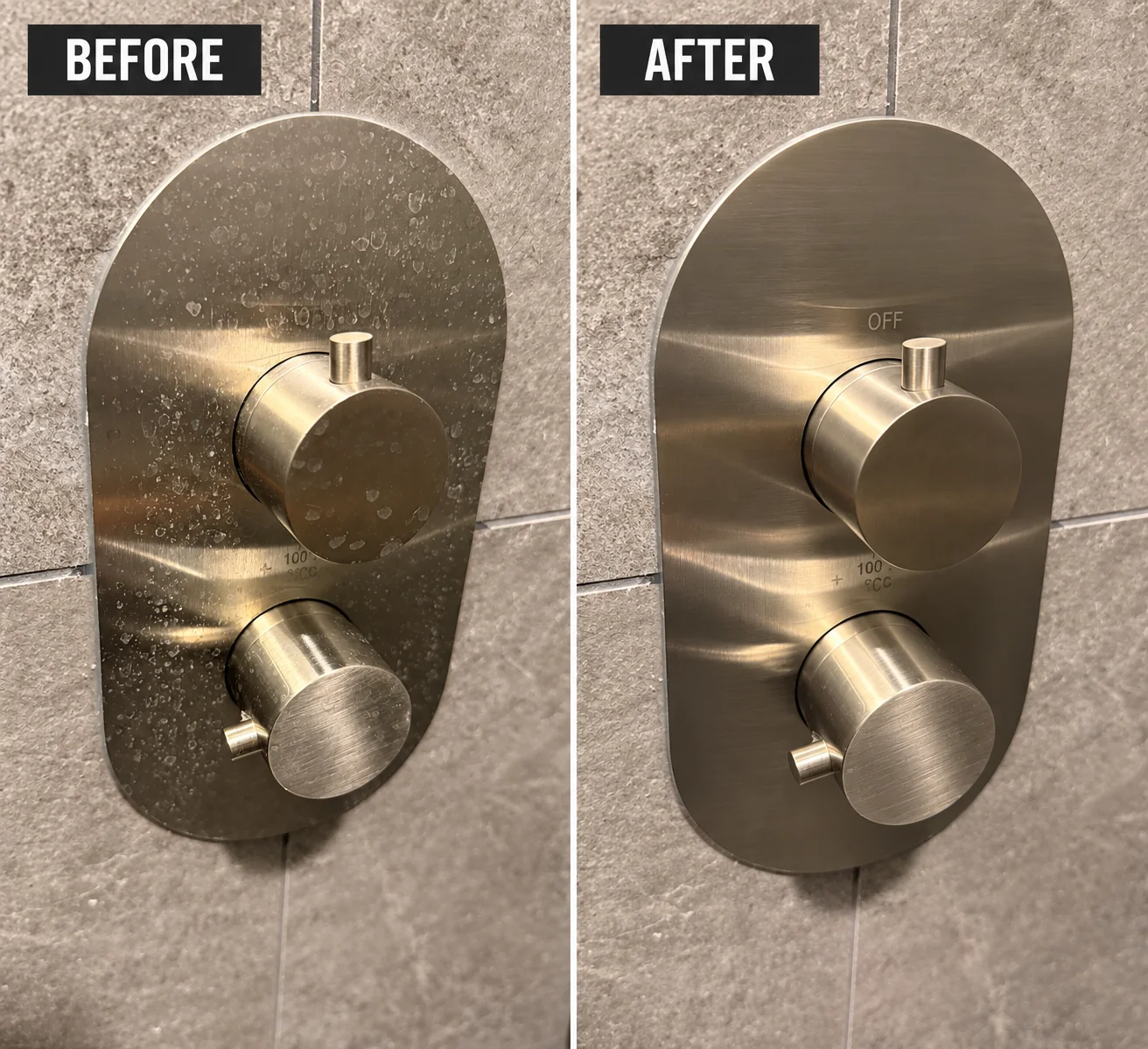
Coatings on these finishes vary by maker. Read the care instructions that came with the fixture, or try the method on the back of the handle first. On brushed steel, wipe along the grain, never in circles.
Acrylic tubs and shower bases, and cement grout
Acrylic scratches easily, so use a soft cloth and no scouring powder. Cement grout is worn by repeated acid soaks, so on tiled walls, wet the grout lines with water first and keep the vinegar on the tile, where the spots are.
Lifting scale from a tap takes a soak and a soft brush
Scrubbing hard at limescale scratches the plating long before the crust comes off. Let the acid do the work.
- Wipe the tap with warm water and a little dish soap, then dry it, so the acid touches the mineral and not a film of soap.
- Soak a cloth or a few paper towels in white vinegar and wrap them around the spout and the base. For the end of a spout, fill a small bag with vinegar and fasten it over the tip with an elastic band.
- Leave it for 30 to 60 minutes. A thick ring at the base can take a second round, which is gentler on the finish than one very long soak.
- Unwrap, then work the softened edge with an old soft toothbrush, especially where the tap meets the counter or the tub.
- Rinse with plain water so no vinegar stays on the metal or drips onto stone.
- Dry and buff with a microfibre cloth. Water left to dry on the cleaned chrome starts the next layer the same day.
If spots on shower glass still show when you look across the pane at an angle, after the scale has gone, the glass surface itself may be pitted. That is wear in the glass, and no cleaner reverses it.
Bleach and vinegar never go into the same bottle or onto the same surface
Many people disinfect a bathroom with bleach and then go after the scale with vinegar, or the other way round. Health Canada has issued a public advisory about exactly this:
Bleach will react with any cleaning product containing ammonia or an acid, including vinegar.
The advisory names glass cleaners and toilet bowl cleaners among the products that react, and it describes effects from burning eyes and light-headedness to death. Its instruction is to read product labels and never mix any cleaning product with household bleach. In a bathroom that means finishing one product, rinsing the surface with plain water, and opening the window or running the fan before the next one goes on. The full text is in Health Canada's advisory, never mix bleach with other cleaning products.
A squeegee and a dry cloth after each shower keep the next layer thin
Scale only forms where water evaporates. Take the water away and there is nothing left to dry into a crust.
- Pull a squeegee down the glass after the last shower of the day, finishing with the bottom edge, where water sits longest.
- Keep a microfibre cloth on a hook by the tub and run it over the taps and the shower control in the same minute.
- Leave the bathroom fan on for a while after showers, or the door open, so the walls dry faster.
- Once a week, spray the glass and fixtures with half vinegar, half water, wait a minute, rinse and wipe dry.
A crust that has built up for months is a job for a deep clean
A weekly wipe keeps up with fresh spots. Rings that have built up for months, glass you can barely see through and a tub line that has gone white take longer, and they are listed in PavMa's deep cleaning checklist: removing soap residue and normal limescale, detailed cleaning of shower glass, cleaning tile and grout, and polishing faucets. Once the bathroom is back to clean, a routine house cleaning visit, weekly, bi-weekly or monthly, keeps it there. The difference between the two visits is laid out in the article on choosing deep or regular cleaning for a first visit.
When you ask for a quote, mention any marble or other natural stone, coloured or matte fixtures and anything that should not be touched, so the visit is planned around them. Photos of the shower and the taps can go by WhatsApp. Visits run Monday to Saturday, 8 AM to 7 PM. Use the deep cleaning quote form, or call 437-889-1213.
Hard water, softeners and vinegar on bathroom surfaces
Do I need a water softener to stop limescale in a York Region home?
York Region notes that many people install softeners to reduce hardness, which makes washing easier and prevents mineral buildup, and it reports no known negative health effects from hardness itself. Without one, drying the glass and taps after showers keeps the buildup thin.
Can vinegar damage grout?
Cement grout is worn down by repeated acid soaks. On tiled walls, wet the grout lines with plain water first, keep the vinegar on the spotted tile, and rinse the whole wall with water when you are done.
Is it safe to use vinegar right after cleaning the toilet with bleach?
Not on the same surface without rinsing. Health Canada warns that bleach reacts with any product containing an acid, including vinegar. Finish with one product, rinse with plain water, ventilate the room, and only then use the other.
Why does Toronto water still leave spots if the City calls its mineral levels low?
Any tap water carries some dissolved minerals, and they stay behind wherever a drop dries. Lower levels mean the crust builds more slowly, but chrome and glass that are never dried still collect it over the months.