A post-renovation clean removes what the work left on top of your finishes: fine dust, small debris and accessible specks of paint and adhesive. It does not repair what happened to the finishes themselves, and it is not the way to deal with dust from lead paint or asbestos in an older home. Knowing which is which tells you who to call for each problem.
Cleaning starts once the trades have finished and the site is safe to enter
Dust keeps being made for as long as anyone is cutting, sanding or drilling, so a clean booked before the last trade leaves gets covered again. PavMa's post-renovation cleaning page sets out what the space needs first:
- active renovation work is complete;
- major construction debris, tools and sharp materials have been removed;
- the space is safe to enter;
- water and electricity are available;
- new floors, paint and finishes are ready to be cleaned.
The last point is one to ask your contractor about directly. Fresh paint, grout, sealers and floor finishes each have a cure time set by their manufacturer, and wiping or mopping before that time can mark them. Ask for the date each surface can be washed, and book the clean after the latest one.
What the clean removes, and what stays with your contractor
| What you find | Does cleaning handle it? | What that means for you |
|---|---|---|
| Fine pale dust on shelves, sills, baseboards and door frames | Yes | Removing construction dust is the core of the checklist, including corners and hard-to-reach areas. |
| Dust inside new or existing cabinets and closets | Yes | Cabinets and built-in storage are on the list, so leave them empty until the visit if you can. |
| Screws, offcuts, bits of tape and packaging | Small debris, yes | Large debris, tools and sharp materials have to be gone before the cleaners arrive. |
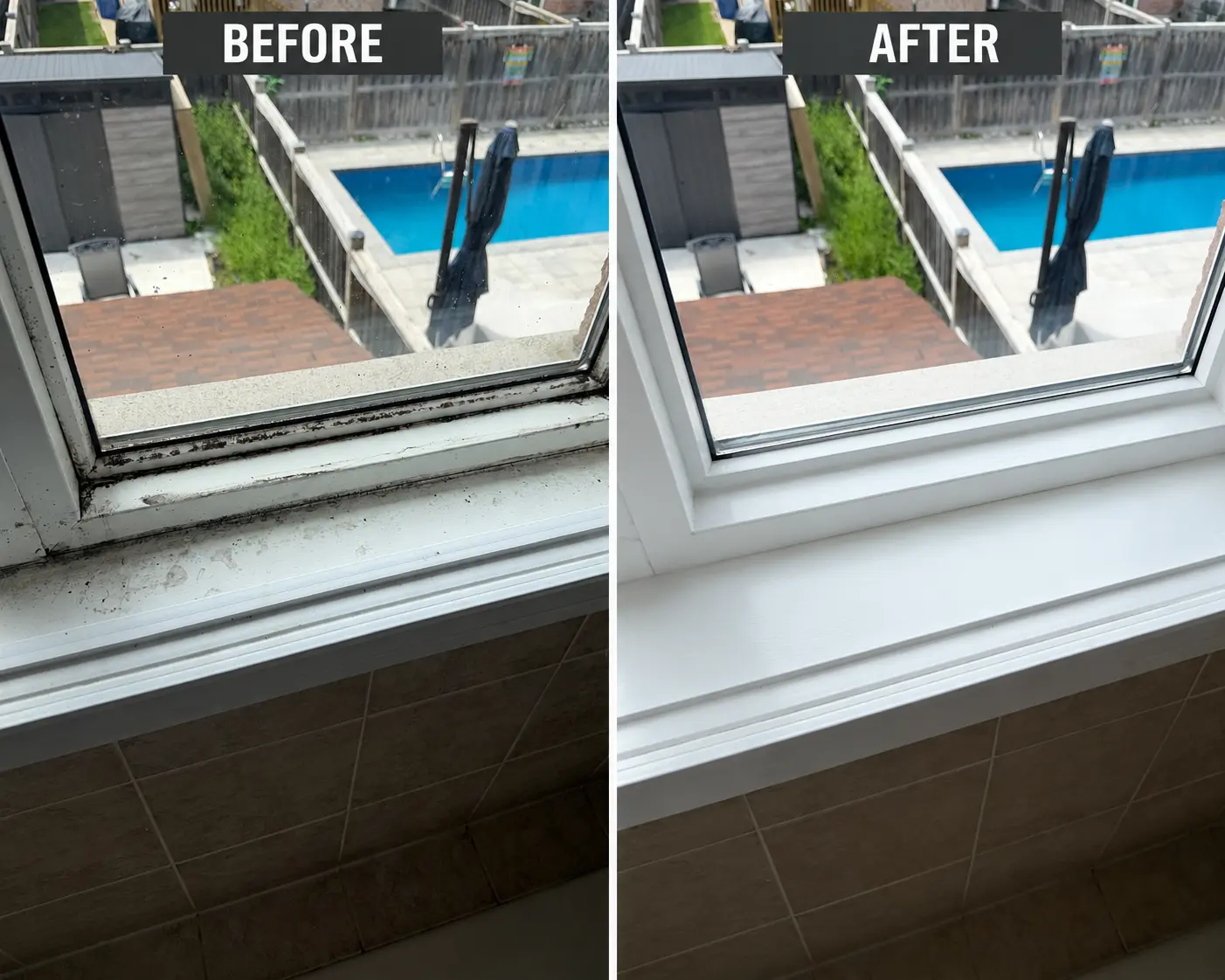
| Paint specks and adhesive spots on glass, tile or floors | Where they are accessible | The checklist covers accessible traces of paint, adhesive and construction materials. Point out the spots you have noticed. |
| Dust on air vent covers | Accessible vents, yes | The ductwork behind the covers is a separate trade and is not part of a cleaning visit. |
| Scratches in new flooring, chipped tile, dents in trim | No | These are damage to the material. They go on the contractor's deficiency list. |
| Patches the painter missed, gaps in caulking, uneven grout lines | No | These are unfinished work, and fixing them makes new dust. |
| Dust from old paint or old insulation in a home built before 1990 | No | See the section on lead and asbestos below before anyone sweeps or vacuums. |
Walk through the rooms with your contractor before the cleaning date. Anything in the "No" rows goes to the contractor first, because a repair made after the clean puts dust back on clean surfaces.
Fine dust settles for days, so the order of the work matters
Dust from sanding drywall is light enough to hang in the air and land again after the visible layer is gone. That is why a room can look clean in the evening and show a pale film on dark surfaces the next morning. Three habits reduce it:
- Work from the top down. Light fixtures and the tops of door frames and cabinets come first, then walls and sills, then floors, so dust that falls lands on a surface that has not been cleaned yet.
- Lift dust instead of pushing it. A vacuum and a damp cloth pick fine dust up. A dry broom or a dry duster sends part of it back into the air.
- Check the furnace filter. If the heating or cooling ran during the work, the filter has been collecting the same dust. Replacing it before the system runs again keeps that dust from being blown back through the cleaned rooms.
PavMa's checklist is built the same way. It covers baseboards, doors and door frames, switches, handles and accessible air vents, and it ends with vacuuming the full floor surface, mopping all hard floors and a final quality check. A light film that returns in the first days is airborne dust that has settled, and a damp cloth removes it.
In a home built before 1990, lead and asbestos come before any sweeping
Dust from new drywall is a nuisance. Dust from old paint or old building materials can be a health hazard, and Health Canada's guidance treats it differently. These questions belong at the planning stage, before demolition, and they are worth asking again if the work has already disturbed old surfaces.
Lead-based paint, according to Health Canada
- A home built before 1960 probably contains lead-based paint. In a home built between 1960 and 1990 the exterior may contain it, and interior paint may contain smaller amounts that could still be harmful.
- Homes built after 1990 should not contain lead in the paint.
- Even small amounts of dust with lead are dangerous to infants and children, and there is currently no known safe level of lead exposure.
- Sanders, heat guns and blowlamps are not to be used on lead-based paint, because they create toxic dust and fumes.
- A lab can analyse paint chip samples, or a contractor with x-ray equipment can test painted surfaces.
The full guidance is on Health Canada's page about lead-based paint.
Asbestos, according to Health Canada
- Asbestos may still be found in older building materials, including floor and ceiling tiles, plaster, drywall, caulking, and insulation around hot water pipes and tanks.
- Fibres are released into the air when those materials are drilled, sawn, sanded, scraped or broken apart.
- Materials that are left undisturbed, or sealed behind walls and floorboards, pose no significant health risk.
- Its advice is to hire a professional to test for asbestos before renovating or remodelling, and a qualified asbestos removal specialist if any is found.
Health Canada's page on asbestos and your health lists the materials and the precautions.
Testing for lead paint or asbestos, and removing either one, are specialist jobs, and neither is on PavMa's list of services. If the materials were tested before the work started, say so in the quote request. If old painted or insulated surfaces were sanded or broken up and nobody tested them, bring it up with your contractor before you book a cleaning visit.
Four details that set the scope of the quote
The amount of dust, the size of the property and the number of affected rooms determine how long the visit takes. These details make the estimate accurate:
- Which rooms had work, and which only collected dust. A kitchen renovation often leaves a film in the hallway and the rooms next to it.
- The kind of work. Drywall sanding and floor refinishing leave far more fine dust than painting or installing fixtures.
- Delicate new materials. Natural stone, unsealed wood and matte finishes may need particular care, and the cleaners need to know before they start.
- Access, parking and the finish date. Give the day the last trade leaves, and the date your contractor says the new finishes can be washed.
Photos sent on WhatsApp are one of the easiest ways to show the scope. The quote is free, and the scope of work is confirmed before the cleaning begins. Use the post-renovation quote form, or call 437-889-1213. If the home is empty and you are moving in after the work, compare the checklist for move-in cleaning as well.
Booking a clean after renovation work
How soon after a renovation can the cleaning be booked?
Once active work is complete, major debris, tools and sharp materials are removed, and the new floors, paint and finishes are ready to be cleaned. Ask your contractor for the date each new surface can be washed, and book after the latest one.
Does a post-renovation clean remove paint specks from floors and glass?
PavMa's checklist covers removing accessible traces of paint, adhesive and construction materials. Patches the painter missed, or damage to the finish itself, are not cleaning problems and go back to the contractor as deficiencies before the cleaning visit.
Why is there dust again a few days after the clean?
Fine dust from sanding hangs in the air and settles after the visible layer has been removed, and a furnace filter that ran during the work can blow more of it around. A damp cloth removes the light film, and replacing the filter reduces it.
Is renovation dust in an older home a health risk?
It can be. Health Canada says a home built before 1960 probably contains lead-based paint and that even small amounts of dust with lead are dangerous to infants and children. It also advises professional asbestos testing before renovating. Neither is a cleaning service.