Sort a shop's cleaning by when customers can see it. Floors, glass and the counter look their best if they're done before the doors open. The entrance, the washroom and anything spilled can't wait and get checked through the day. Shelves, the stockroom and the deeper floor work go after close or into a weekly slot. A small store with one or two people on shift can't clean everything at once, so the question is always which job belongs to which hour.
Each zone of a shop has a time of day that suits it
The grid below is a starting point for a store of a few hundred to a couple of thousand square feet. Move a job to another column if your traffic is different, but keep the logic: anything that's a safety issue stays in the daytime column.
| Zone | Each day | Once a week |
|---|---|---|
| Entrance and mats | Before opening, vacuum or shake the mat. Through the day, check after every rush or snowfall. At close, mop the entry floor. | Wash the mat and the floor under it |
| Door glass and front window | Before opening, wipe handprints at hand height, and spot-wipe again if needed. | Inside glass, frames and sills |
| Sales floor and shelves | Before opening, dust the front-facing shelves. Through the day, pick up tags and dropped stock. At close, sweep or vacuum and mop. | Shelves emptied in sections, baseboards |
| Fitting rooms | Mirror, bench and floor before opening. Clear hangers and pins between customers. Vacuum at close. | Hooks, walls, light switch |
| Cash counter and terminal | Wipe both before opening and whenever they look smudged. Clear the counter completely at close. | Under and behind the counter |
| Customer washroom | Full clean and restock before opening, a check at midday, a full clean at close. | Walls near the toilet, vent cover, door |
| Stockroom and receiving | Keep the path to the back door clear, flatten boxes as they empty, take cardboard out at close. | Sweep under racks, wipe shelving |
| Staff room | Each person cleans up after a break. Wipe the table and counter and empty the bin at close. | Microwave, fridge, sink |
From November to March, the front door is the riskiest spot in the store
Slush and salt come in on every pair of boots, and the first two metres inside the door take most of it. Ontario's Ministry of Labour lists the common hazards in its guide to preventing slips, trips and falls in the workplace, and the weather is on it by name:
seasonal slip, trip and fall hazards (for example, snow and ice)
The same page names spills, unsecured mats, poor lighting and debris in walkways, and it says employers must take every precaution reasonable in the circumstances to protect workers. Its safe work practices include cleaning up spills promptly, routinely removing debris, snow and ice, and keeping mops and buckets readily available. At a shop entrance, that comes down to a few plain habits:
- Wipe up a wet patch as soon as someone sees it, and put out a wet floor sign while it dries.
- Keep the mat flat. A mat that curls at the corner or slides on the tile is a trip hazard of its own, so tape it, weigh it down or replace it.
- Leave nothing in the walkway inside the door: no boxes waiting to be unpacked, no display pushed into the path.
- Keep the entrance well lit, and change a burnt-out bulb near the door the same day.
Salt also leaves a white film on tile and vinyl once the water evaporates. Our article on road salt stains on entryway floors explains how to lift it without dulling the floor.
The sales floor, fitting rooms and counter each need something different
Shelves and displays
Dust builds up fastest on shelves at eye level and below, because that's where stock gets moved. Work one section a week rather than the whole store: take the stock off, dust the shelf and its front edge, then put it back faced and straight. Glass display cases show every fingerprint, so a dry microfibre cloth on the glass each morning saves a full wash later.
Fitting rooms
Customers judge a fitting room in the first second, by the mirror and the floor. Pins, tags and plastic clips collect in the corners and get vacuumed up only if someone looks for them. A small basket on a hook outside each room gives staff one place to drop hangers between customers.
Cash counter and payment terminal
- Wipe the counter and the terminal with a damp cloth and a mild cleaner, then dry them. Spray onto the cloth, not onto the terminal.
- Check the terminal maker's instructions for which products are safe on its screen.
- Dust the keyboard, scanner and receipt printer with a dry cloth. Canned air only blows the dust onto the counter and the stock beside it.
- Clear the counter completely at close, so the next morning's wipe takes a minute.
Stockroom
Back rooms get forgotten because customers never see them, yet staff carry boxes through them all day. The Ontario guide lists debris and cables in walkways among the trip hazards, and in a stockroom the usual culprits are a strap from a delivery, a flattened box on the floor and a cart left in the aisle. Cardboard goes out the same day it's emptied, and nothing stays stacked in the corridor to the back door.
A customer washroom gets checked more than once a day
If your shop lets customers use the washroom, it's the room people remember. A washroom that's spotless at nine can look neglected by two, so one clean a day isn't enough for a store that's busy. A workable pattern for a store open ten hours is a full clean before opening, a check and quick wipe in the middle of the day, and a full clean at close, with soap and paper towels refilled each time.
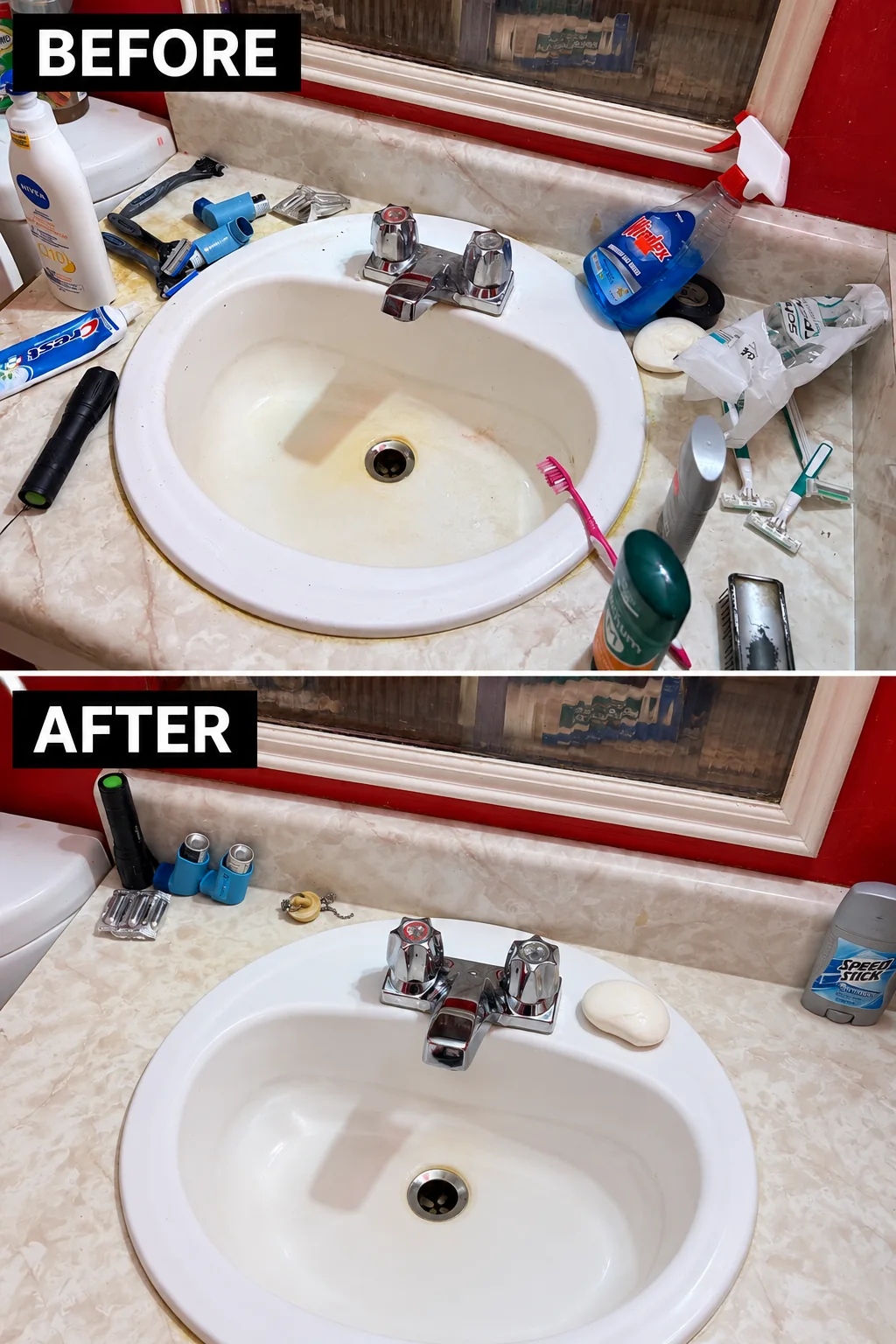
Keep staff products, spare stock and cleaning bottles out of the customer washroom. Every item left on the counter is one more thing to lift and wipe around, and it makes the room look like storage.
A closing routine works best in one direction, from the back to the front door
Working toward the exit means nobody walks across a floor that has just been mopped. Write the routine down and leave it by the till, so whoever closes does it in the same order.
- Take the cardboard and garbage out of the stockroom, and close the back door.
- Wipe the staff room table and counter, and empty its bin.
- Clean the washroom fully and restock soap, paper towels and toilet paper for the morning.
- Clear the fitting rooms of hangers, pins and tags, then vacuum them.
- Put stray stock back, and dust any shelf that's been emptied during the day.
- Clear the cash counter and wipe it and the terminal.
- Sweep or vacuum the sales floor from the back wall toward the entrance, then mop the hard floors the same way.
- Mop the entrance last, stand the mat up or roll it if it's wet underneath, and lock up.
What to send a commercial cleaner so the quote fits your shop
PavMa's commercial cleaning covers retail spaces along with offices and professional spaces, and the checklist is built around foot traffic, washrooms, customer-facing areas, staff spaces, flooring and the hours when cleaning can take place. It can include reception and customer areas, washroom cleaning and restocking, the staff room, vacuuming and floor washing, touchpoints, and the garbage and recycling reset. Arrangements can be one-time or recurring, including before an event or after a busy period such as the holiday weeks.
When you ask for a quote, give:
- the approximate square footage and what the store sells;
- your opening hours and the time of day the cleaning could happen;
- how often you want it, and which zones from the grid above you'd hand over;
- parking, alarm codes or key arrangements, and any area that is off limits.
A walkthrough or photos may be requested before the final quote for larger or more complex spaces, and photos can go on WhatsApp. The scope of work is confirmed before the cleaning begins, and there are no hidden fees. Visits run Monday to Saturday, 8 AM to 7 PM, so most shops book the slot before they open or on a quieter weekday. If you're writing the scope for the first time, our guide to writing a cleaning scope walks through the terms, and the Thornhill office cleaning page shows the same service for a business in one community. Request a free, no-obligation quote through the commercial cleaning quote form or call 437-889-1213.
Shop cleaning questions owners ask
Can a small shop be cleaned while it is open?
Light work can, such as wiping the counter, checking the washroom and picking up the sales floor. Mopping, emptying shelves and full washroom cleans are better before opening or after close, because a wet floor in a walkway is a slip hazard and customers have to step around the work.
How often should a store's customer washroom be cleaned?
In a shop that is open all day and lets customers use the washroom, once a day is rarely enough. A full clean before opening, a midday check with a quick wipe and a restock, and a full clean at close keeps it presentable through the busiest hours.
What should a shop owner clean first after a renovation or a new fit-out?
Fine dust settles on every shelf, fixture and display after drywall or flooring work, so the dust comes off first, from high surfaces down, before any stock goes back. PavMa's post-renovation cleaning handles this once the work is finished and tools and major debris are out.