Between getting the keys and the moving truck pulling up, a new home is as open as it will ever be. Kitchen cabinets are bare, closet shelves are empty and you can see the floor where the bed and the sofa will stand. That window is for the surfaces your things are about to cover. Glass, mirrors and a final pass on the floors can wait until the boxes are in.
Inside each room, work from the ceiling down to the floor
Dust you knock off a light fixture lands on whatever is below it, so the order inside a room matters more than which room you start with. Finish one room completely before the next, and you can let the movers into it while you carry on elsewhere.
- Ceiling corners, cobwebs, light fixtures and the blades of any ceiling fan. Dry-dust them first, then wipe with a damp microfibre cloth.
- Air vent covers you can reach, and the tops of door frames and window frames, where dust sits out of sight.
- Inside closets and built-in storage: the top shelf, the rod, the lower shelves, then the closet floor. Vacuum the corners before you wipe, so crumbs and grit do not turn into a paste.
- Scuff marks on the walls, light switches, door handles and both sides of each door.
- Windowsills and the window tracks you can get at. Loosen the grit in the tracks with a dry brush and vacuum it out before any water goes in.
- Baseboards, the whole way round, including behind where a door swings.
- The floor: vacuum first, then wash it with a product that suits the material. Close the door or tape off the room if it is going to stay empty for a while.
The kitchen and the bathrooms follow the same order, with cabinet and appliance interiors in step three. They usually take the longest, so starting with one of them while you are fresh is sensible.
Now or after the boxes: which jobs can wait
Not everything has to happen before move-in day. The test is simple: will furniture, boxes or your belongings cover it within the next few hours? If yes, it goes first.
| Spot | Before the truck | Why |
|---|---|---|
| Kitchen cabinets and drawers, inside | Yes | Dishes and food go in within the first hour of unpacking |
| Bathroom vanity, inside and under the sink | Yes | Toiletries and cleaning supplies fill it on day one |
| Fridge and freezer, inside | Yes | Groceries need it the same evening |
| Closet shelves, rods and floors | Yes | Hanging clothes and stacked boxes block them for weeks |
| Floor where beds, sofas and dressers will stand | Yes | Heavy pieces are rarely moved again once placed |
| Oven, inside | Before you first cook | Nothing stands in front of it, but old spills smoke when heated |
| Mirrors, interior glass, glass shower doors | Can wait | They stay reachable, and moving day leaves fingerprints on them anyway |
| Entry and hallway floors | Last pass after | Movers track grit in from the street on every trip |
If time runs out, the first five rows are the ones to protect. Everything below them can be done on an evening in the first week.
What to look at inside the kitchen and bathroom fixtures
Appliances and fixtures that stay with the home are where a previous household's leftovers hide. Open each one before you clean it, so you know what you are dealing with.
- Refrigerator
- Take out the shelves and crisper drawers and wash them at the sink rather than wiping them in place. Wipe the door seals, where crumbs collect in the folds. If the fridge can be moved easily and safely, clean the floor under it before it goes back.
- Oven and cooktop
- Remove the racks and soak them. Check the bottom of the oven for burnt-on spills and the area around each burner or element.
- Range hood
- The filter above the cooktop holds the last occupant's cooking grease. Most filters slide or clip out and can be soaked in hot water with dish soap.
- Microwave
- Look at the inside of the door and the ceiling of the cavity, which are easy to miss with the door open.
- Sink and faucet
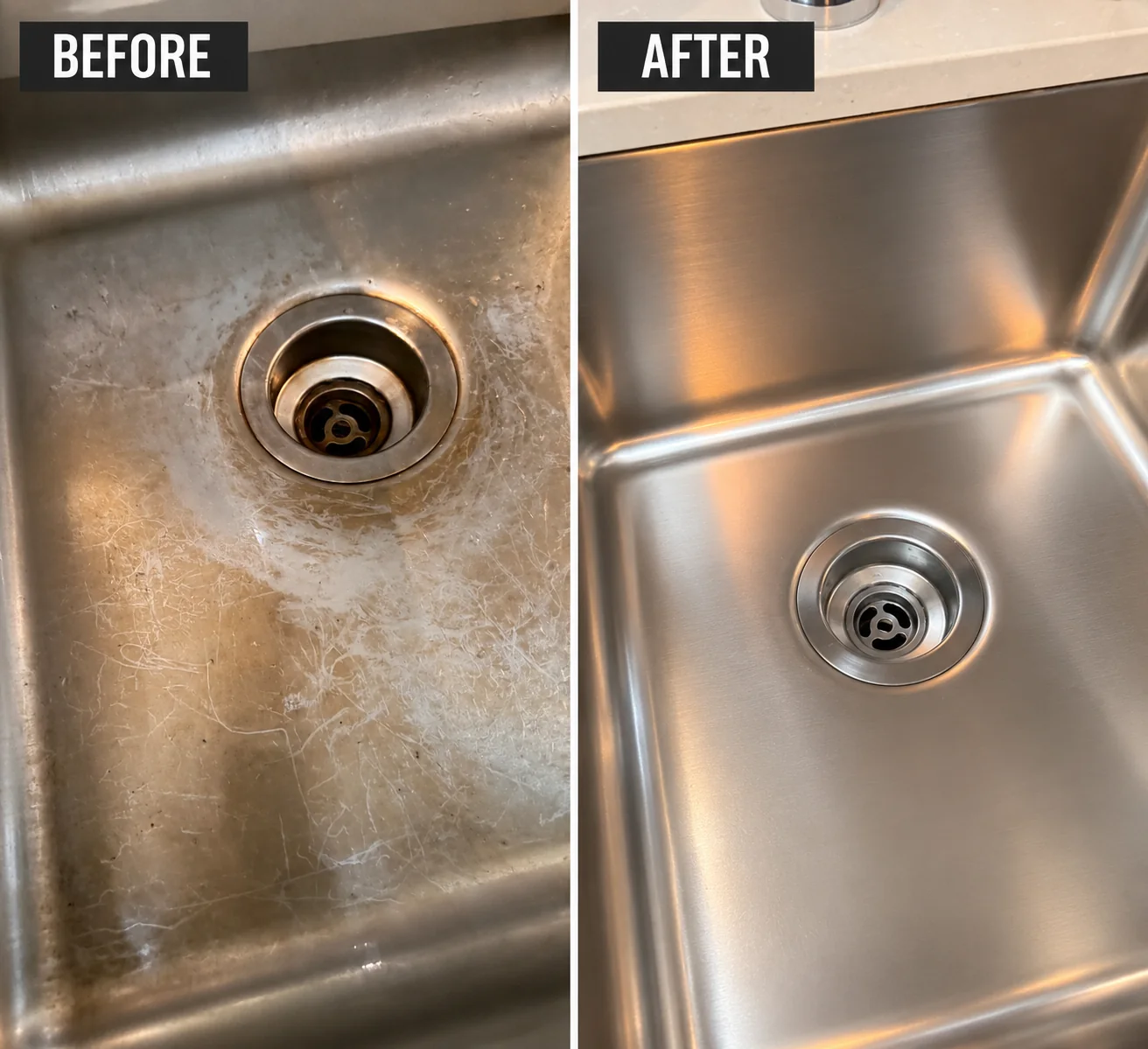
- Clean the drain area and the base of the faucet, where water marks and residue build up.
- Toilet, tub and shower
- Clean the base of the toilet where it meets the floor, the tile and grout around the tub, and the tracks of a sliding shower door.
Paint cans, cleaners and bulbs left behind need special disposal in Toronto
The previous occupant may have left half-used paint in the basement, cleaning products under the sink or spare bulbs in a closet. The City of Toronto classes these as household hazardous waste: corrosive, flammable, explosive or poisonous material that must not go in the garbage, the Blue Bin, the Green Bin or down a drain or toilet. The City's list names, among others:
- latex, acrylic and oil paints, including empty paint cans, plus stains, thinners and primers;
- bleach, ammonia-based cleaners, disinfectants, drain cleaners, oven cleaners and glass cleaners;
- light bulbs of every kind, including LED, halogen, compact fluorescent and fluorescent tubes;
- batteries, aerosol cans that are not empty, propane and other gas cylinders.
For a house, the City's free Toxic Taxi picks up between 10 and 50 litres or kilograms at a time, counted by the volume on the containers, and it is booked online or through 311. Paint cans need a lid, different products stay in separate containers, and everything goes out in an open box, not a bag, by 7 a.m. on the pickup day. In a City-serviced apartment or condo building, the property manager or building staff book the pickup. The full list and the drop-off depot option are on the City's page on household hazardous waste.
Moving boxes are ordinary recycling once you flatten them. Since January 1, 2026, residential recycling in Toronto is collected by Circular Materials rather than the City, so missed pickups and blue bin requests go to them, at 1-888-921-2686. Renovation waste found in a garage or basement does not go in any bin: the City sends it to a drop-off depot. Both points are on the City's page on Toronto's recycling program.
Booking a move-in clean: the details that set its scope
PavMa's move-in and move-out cleaning is built for an empty or nearly empty home. Its checklist covers cabinets and built-in storage inside and outside, the fridge, oven and microwave inside and outside, the range hood, closets, baseboards, vents and light fixtures you can reach, and every floor. The visit works best when most furniture has not arrived yet, which is the same window this article is about.
When you ask for the quote, these details make it accurate:
- the key date and the time the truck is booked, so the clean fits between them;
- for a condo, how elevators are booked, how the concierge lets contractors in, and where a car can park;
- which appliances stay with the home;
- confirmation that water and electricity will be on;
- whether movers or trades will still be working there, so the timing can be planned around them.
If you are also leaving a rental on the same weekend, the other side of the move is covered in the article on how clean a rental has to be when you move out in Ontario. A home that has been empty for months, or was left with heavy buildup, may need the longer list on the deep cleaning page. Photos of the kitchen and bathrooms can be sent on WhatsApp for the estimate. Visits are booked Monday to Saturday, 8 AM to 7 PM, through the move-in cleaning quote form or by calling 437-889-1213.
Timing a move-in clean around keys, movers and leftovers
Should I clean before or after the movers bring everything in?
Do the surfaces your belongings will cover before: cabinet and drawer interiors, closets, the fridge and the floor where furniture will stand. Mirrors, glass and the entry floors can be done after, since moving day marks them anyway.
What do I do with paint and cleaning products the previous owner left?
In Toronto these are household hazardous waste and must not go in the garbage, any bin or the drain. The City's Toxic Taxi collects 10 to 50 litres or kilograms from a house, booked online or through 311, or you can take them to a drop-off depot.
Does a move-in clean need the water and power on?
Yes. PavMa's move-in and move-out service asks for water and electricity to be available and for access instructions to be shared in advance, so check that the utilities are transferred before the cleaning date.
Can the cleaning happen while movers or trades are still in the home?
It can be planned around them, but surfaces get dirty again while people carry things in or work. Tell PavMa when you request the quote, and the timing of the clean can be recommended for that situation.